
Church Treasurer Duties: Weekly, Monthly and Annual Checklist
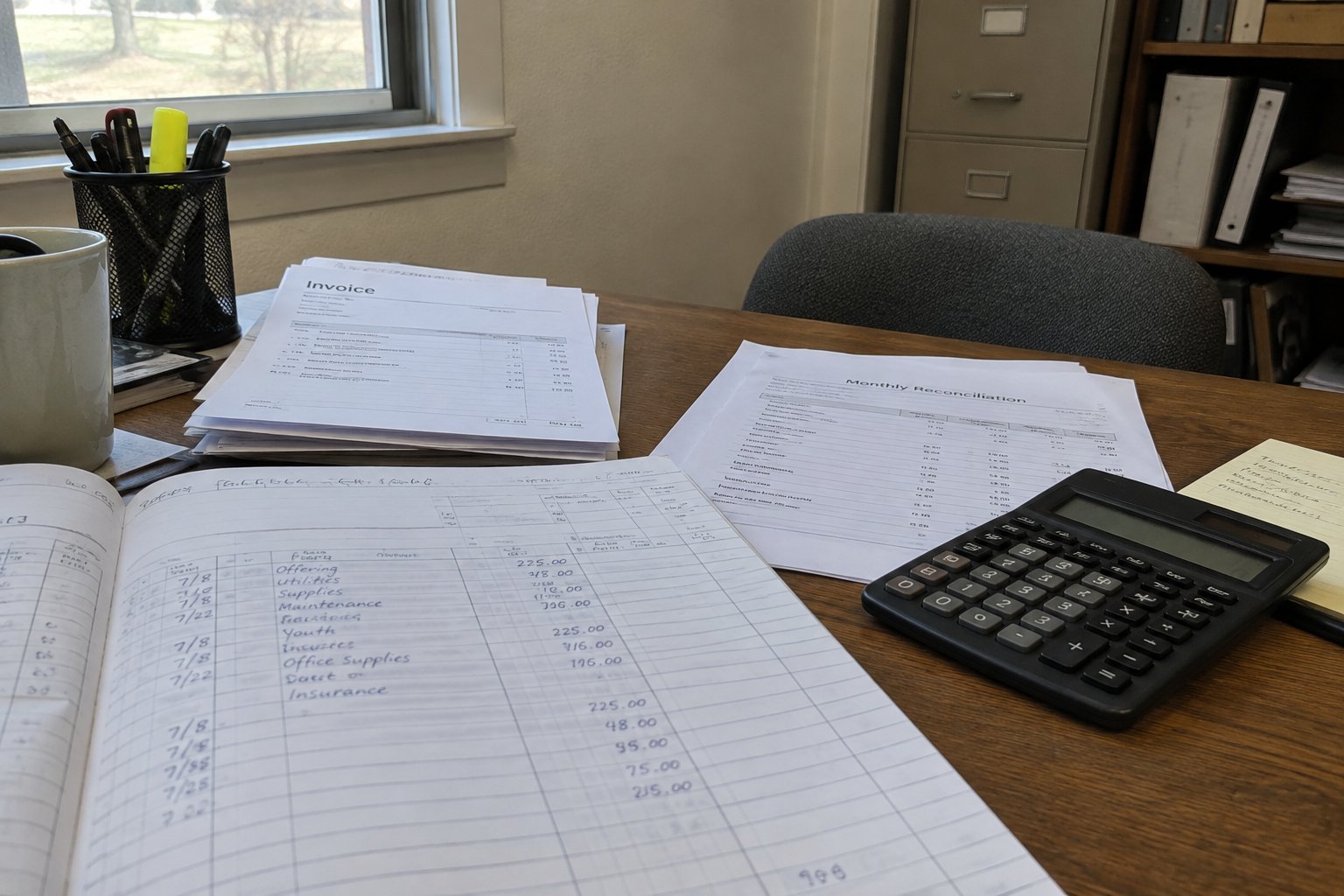
A church treasurer's core duties are to pay authorized expenses, maintain accurate financial records, monitor available cash and report the church's financial position. The role also includes coordinating assigned tax and reporting responsibilities. The United Methodist treasurer description outlines these responsibilities while separating payment approval, check signing and bank reconciliation.
Use the schedule below as a proposed working checklist, not a universal job description. Assign each task to a named person before adopting it. Your church's governing documents and denominational requirements determine who has authority; the ELCA treasurer guide specifically directs congregations to their bylaws.
Establish the treasurer's authority first
Ask church leadership to approve a written description of your responsibilities. Include who authorizes spending, who releases payments, who reconciles accounts and who receives reports. Do not assume that being responsible for the books gives you permission to approve every purchase. The United Methodist guidance treats authorization, signing and reconciliation as separate responsibilities.
For your local checklist, add these practical details:
- Your reporting contact and meeting schedule.
- Spending limits and the approval needed for exceptions.
- The person responsible for payroll and tax filings.
- A backup for absences and urgent payments.
- Where unresolved questions must be referred.
Treat these as decisions for leadership to make with you, rather than responsibilities to accept silently.
Weekly duties: keep payments and records current
Set a regular working session for routine bookkeeping. The treasurer's payment and recordkeeping responsibilities are described in the United Methodist role outline; the following is a suggested weekly arrangement of that work.
- Review bills coming due. Check that each has supporting documentation and the required approval before arranging payment.
- Enter completed payments in the correct expense category and fund. Attach or file the supporting invoice or reimbursement request.
- Review available cash against upcoming obligations. Flag a likely shortfall to the responsible leader rather than waiting until a payment fails.
- Obtain the receipts summary from the person responsible for incoming funds. Follow up on missing information rather than guessing how to classify it.
- Keep a short unresolved-items list, with an owner and next action for each question.
Check incoming-money documentation without taking over every stage of handling it. Orthodox diocesan treasurer guidance calls for collection reports that identify receipts by category and identify gifts for specific purposes. It also separates counting and depositing responsibilities from the treasurer's work.
For your weekly routine, ask whether each expected collection report has arrived and whether its purpose breakdown is clear. If something is missing, request the original documentation. Do not create a replacement total simply to finish the week's entries.
Monthly duties: reconcile and explain the results
Complete account reconciliations
Arrange for every bank account to be reconciled each month, including savings and ministry accounts. Reconciliation means comparing the books with the bank's records and explaining the differences, not merely checking the ending balance. Orthodox diocesan guidance calls for monthly reconciliations and reports covering all parish accounts.
Use this month-end checklist:
- Confirm that statements and supporting records are available for every account.
- Investigate unmatched transactions and old outstanding checks.
- Obtain missing activity from groups with separate accounts.
- Make sure the assigned reviewer receives the reconciliation and original statement.
Who prepares and reviews these documents depends on your church's rules. For example, the Diocese of Venice financial policies require the pastor or administrator to review bank statements and completed reconciliations. That is a diocesan rule, not a universal assignment for all churches.
Present a useful financial report
Prepare a report that compares actual income and expenses with the approved budget. Identify significant differences and explain what needs attention. The ELCA financial guide recommends budget comparisons and investigation of significant variances.
A practical meeting packet can include:
- Current-month and year-to-date income and expenses.
- Budget comparisons with short explanations.
- Account balances and outstanding obligations.
- Separate information about money reserved for particular purposes.
- Questions requiring leadership's decision.
Use plain explanations: what changed, whether it is temporary, and what decision is needed. For instance, label an expense as an early annual payment rather than leaving readers to interpret an unexplained monthly overspend. This is a suggested reporting approach, not a prescribed accounting format.
Annual duties: budget, close the year and support review
Put annual work on the calendar before year-end. Use the church's fiscal year for financial reporting and the applicable tax reporting periods for tax work; do not assume every deadline falls at the same time. The IRS church tax guide distinguishes annual information returns, employment tax returns and other reporting obligations.
- Help prepare the next budget. Supply actual results, recurring commitments and known changes; leadership should follow its own approval process. Budget assistance is among the duties in the ELCA treasurer guide.
- Complete year-end reconciliations and prepare the annual financial statements.
- Assemble requested records for the independent financial examination, review or audit required by your church.
- Track the findings and the people responsible for corrective action.
The last three items reflect the preparation and follow-up described in the Episcopal business methods manual. Check your own denomination's requirements for the type of examination and who may perform it. Do not assume an informal committee review satisfies a requirement for a professional audit.
Also agree on who prepares donor acknowledgments and who checks the related totals. The IRS church tax guide explains contribution substantiation and disclosure rules. The treasurer's checklist should identify the responsible person without automatically assigning every donor-record task to the treasurer.
Payroll and taxes: maintain a separate deadline calendar
A weekly or monthly bookkeeping routine does not replace tax deadlines. Churches generally have an exception from filing Form 990, but that does not eliminate employment tax or other applicable filing responsibilities. Clergy also have special tax treatment, so ordinary payroll assumptions may not apply. See the IRS Tax Guide for Churches and Religious Organizations.
For each applicable obligation, record the preparer, reviewer, deadline and evidence of completion. Ask a qualified church tax adviser or payroll provider to confirm the church's filing calendar and clergy treatment. State requirements differ; check your state's revenue agency rather than assuming federal exemption settles state obligations.
The IRS employment tax overview identifies responsibilities including required tax deposits, employment returns and wage reporting. Treat tax deposits and return filing as separate tasks to verify. Your checklist should ask both whether payment was made and whether the required return was accepted.
Safeguards that protect the treasurer
The ELCA guide explains that separating financial responsibilities protects both church assets and the reputations of people handling them.
Separate approval from payment
Have another authorized person approve invoices, including your reimbursements. Apply the same distinction to online bill payments: the person directing an electronic payment is performing the equivalent of signing a check. These controls are explained in Discipleship Ministries' fraud-prevention guidance.
Keep offering handling independent
Use at least two unrelated counters and preserve their count documentation. Do not make the treasurer the sole counter, depositor, recorder and reviewer. The same fraud-prevention guidance recommends rotating counters and connecting deposit receipts with count sheets.
Give reviewers original information
Provide access to bank statements, not just a summary you prepared. The Diocese of Venice policies illustrate direct statement review and dated review of reconciliations. Ask your leadership to adopt a clear, documented review arrangement suitable for your church.
Plan for someone else to take over
Keep procedures and supporting records accessible to authorized successors. Follow an approved retention schedule rather than deleting files simply because the year has closed. The Episcopal business methods manual covers documentation, access safeguards and records management.
Before accepting or renewing the role, ask leadership to name your backup and independent reviewer. A manageable treasurer assignment should come with shared oversight, not an expectation that one person will handle and verify everything.
Doing this in Chapel Desk
Chapel Desk's Pro plan includes a finance ledger for contributions, expenses with receipts, and reimbursement requests with an approval thread. It also supports per-household giving statements and role-based team access.
Sources
- Discipleship Ministries: Church Treasurer
- ELCA: Congregational Treasurers' and Bookkeepers' Financial and Accounting Guide
- Diocese of Philadelphia and Eastern Pennsylvania: Helpful Information for Treasurers
- Diocese of Venice: Financial Policies and Procedures for Parishes and Schools
- The Episcopal Church: Manual of Business Methods in Church Affairs
- IRS: Employment Tax Requirements